
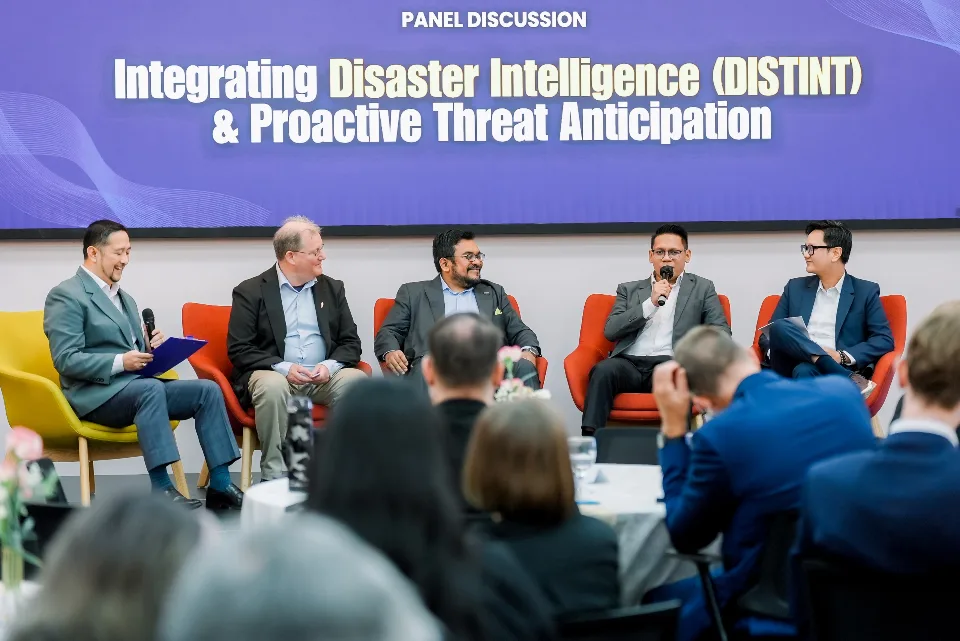
The shift from reactive disaster response toward proactive, intelligence-driven readiness took center stage at Total Defense: Lessons from the Nordic Model for Community Readiness, held on September 29, 2026, at the newly opened James Yap Ho Conference Hall at the AIM Conference Center in Makati City.
The forum brought together experts from defense, government, research, technology, business, and international organizations to examine how the Nordic concept of Totalförsvar, or total defense, could inform approaches to community readiness and national resilience in the Philippines.
Discussions covered the adaptation of total defense strategies to an archipelagic setting, disaster intelligence, proactive threat anticipation, hybrid and cyber threats, psychosocial resilience, and collaboration across public and private sectors.
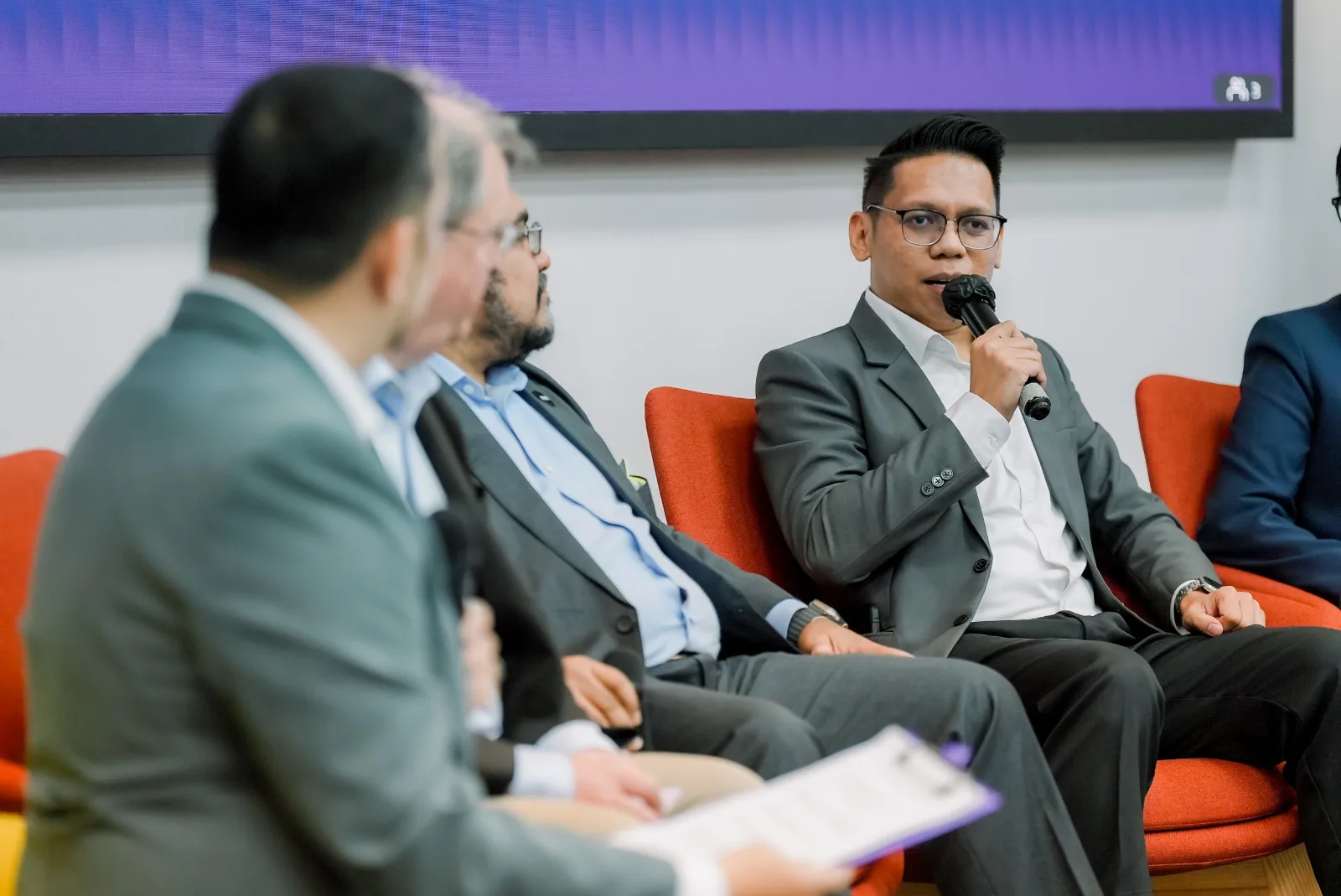
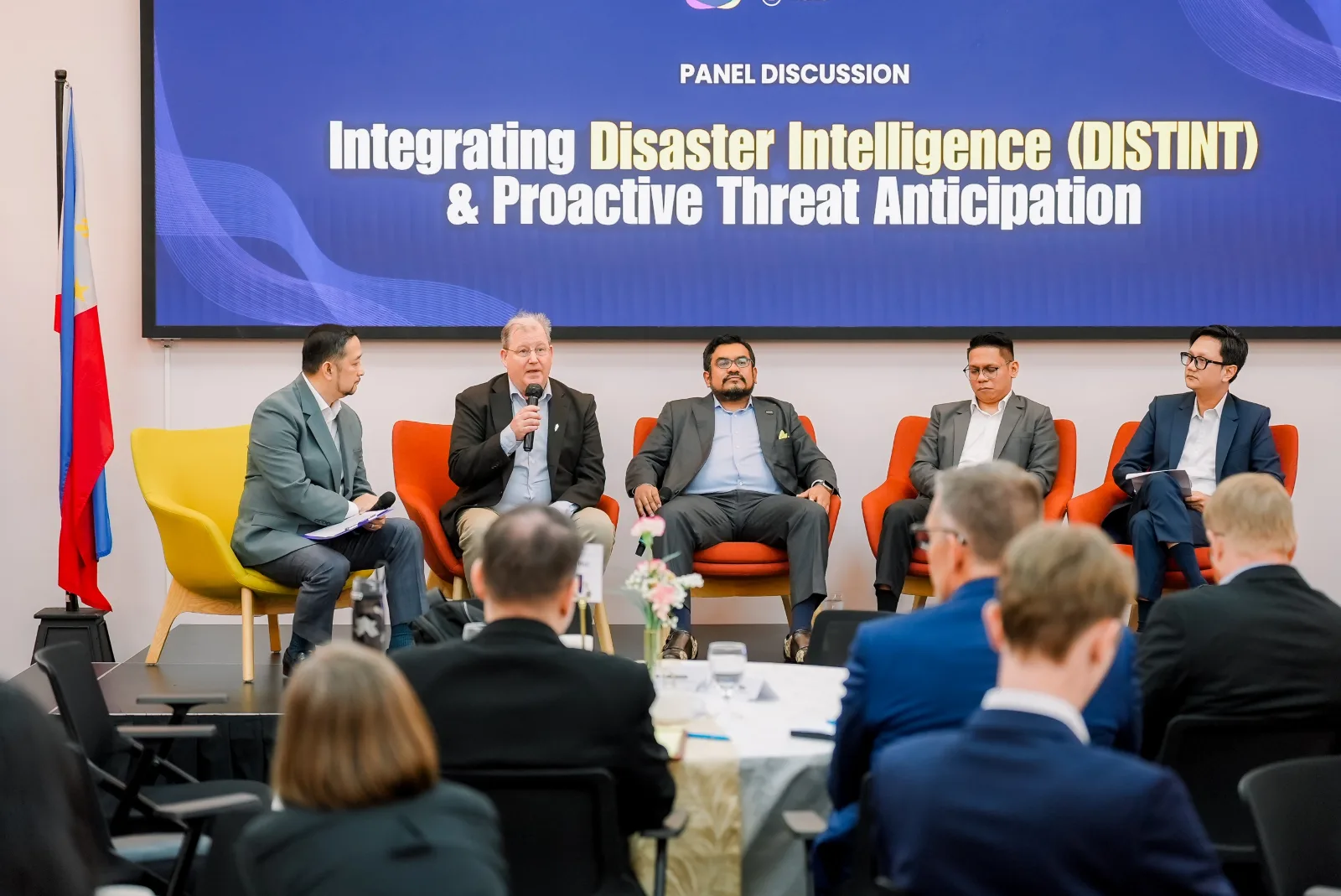
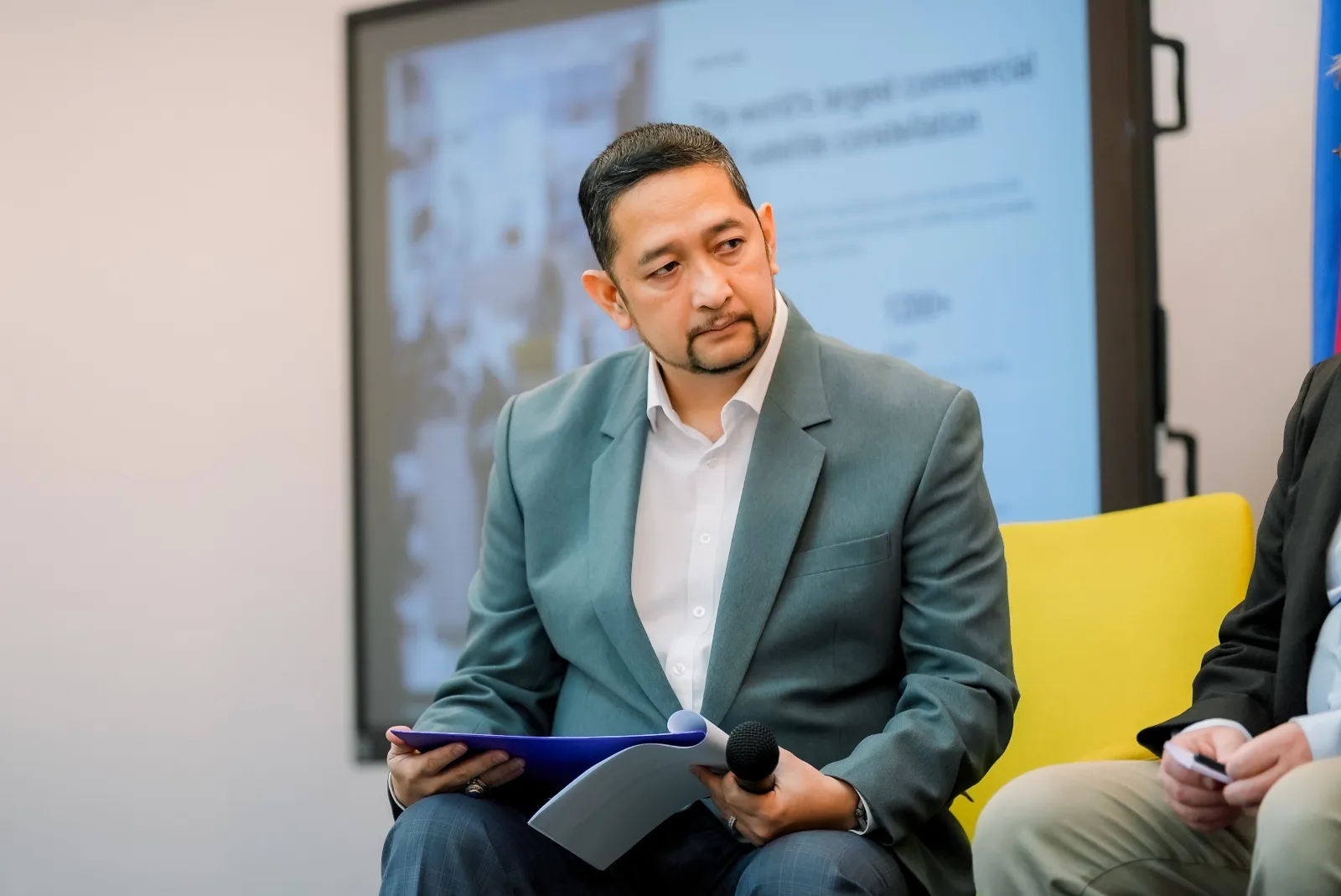
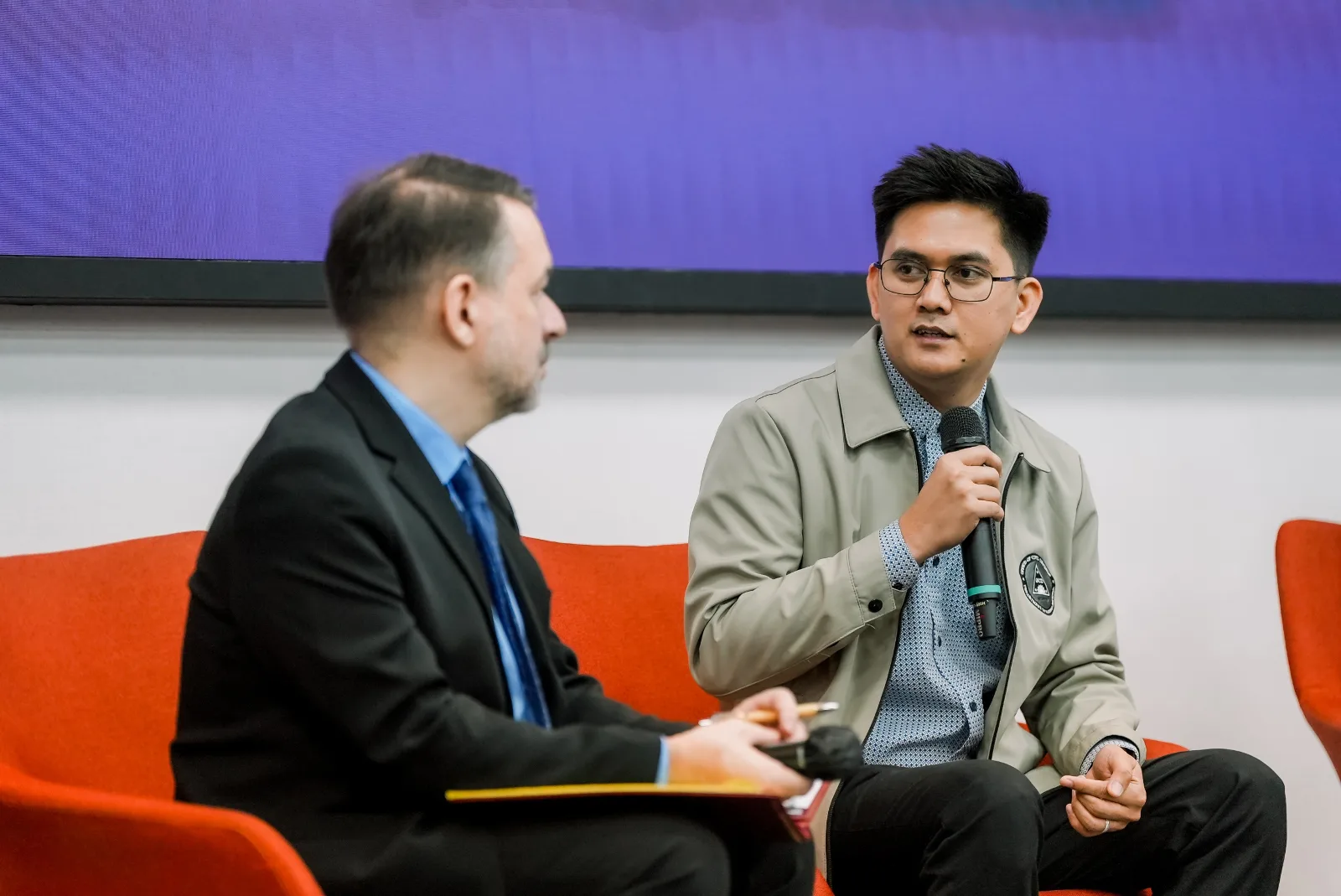
A key part of the program was Panel 2: Integrating Disaster Intelligence (DISTINT) & Proactive Threat Anticipation, which featured James Dumbrique, Chief Operating Officer and Co-Founder of CrisisOps. He joined Matthias Burell, PhD, of the Swedish Defence Research Agency (FOI), Navin Gopal, VP Missions - South East Asia of ICEYE, and Paul Tuason, Head of CU Government Policy & Advocacy for Singapore, Brunei, Philippines and Pacific Islands of Ericsson Telecommunications, with the discussion moderated by Prof. Francisco Ashley “Ace” Acedillo, Academic Program Director of the Executive Master in Cybersecurity Management at AIM. The panel examined how institutions can move beyond documenting the effects of disasters and instead use intelligence to identify threats, understand vulnerabilities, and support decisions before crises fully unfold.
A central discussion point was the need to elevate disaster intelligence from an operational function into a strategic capability. By bringing together geospatial intelligence, open-source information, meteorological data, public health information, and other sources, institutions can develop a clearer picture of emerging risks and identify where early action may be needed.
This approach also supports anticipatory action. Rather than waiting for an incident to trigger a response, data-driven thresholds can help authorities and organizations pre-position resources, activate funding, and implement preventive measures before expected impacts escalate.
The panel further emphasized that effective risk analysis must account for human vulnerability. Socioeconomic conditions, infrastructure gaps, demographics, and other community factors can determine how severely a hazard affects people and critical systems. Integrating these considerations into intelligence processes can help decision-makers prioritize protection and resources.
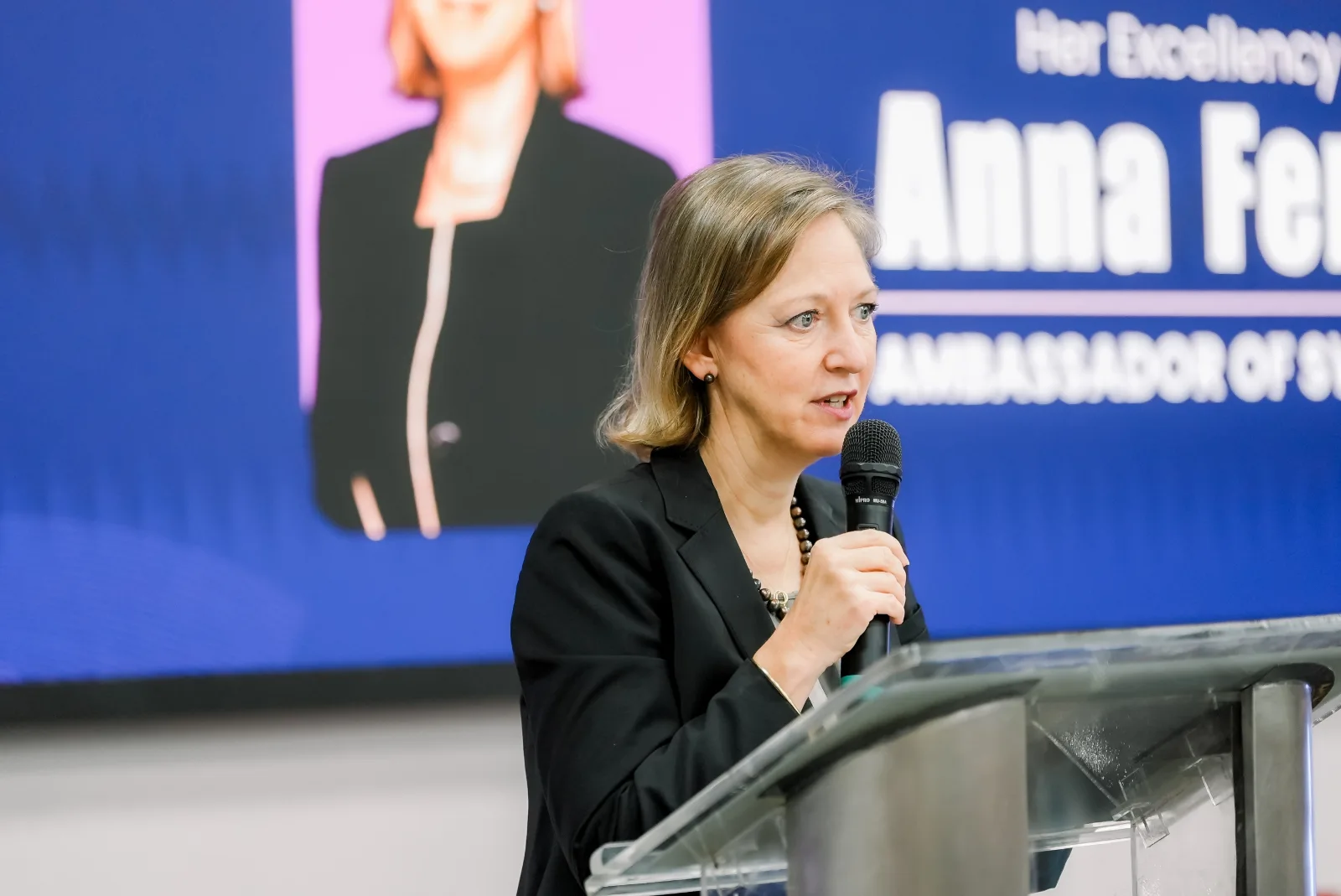

The wider forum reinforced this whole-of-society approach. The program opened with remarks from Prof. Chad Briggs, PhD, Academic Program Director of the Executive Master in Disaster Risk and Crisis Management at AIM and H.E. Anna Ferry, Ambassador of Sweden to the Philippines, followed by a keynote address from General Dennis Hedström of the Swedish Ministry of Defence. Joining General Hedström in Panel 1 is Frankie Cortez, Civil Defense Officer IV of Office of Civil Defense Cordillera. Moderated by Prof. Briggs, Panel 1 explored how Nordic Totalförsvar principles could be adapted to the Philippine context.
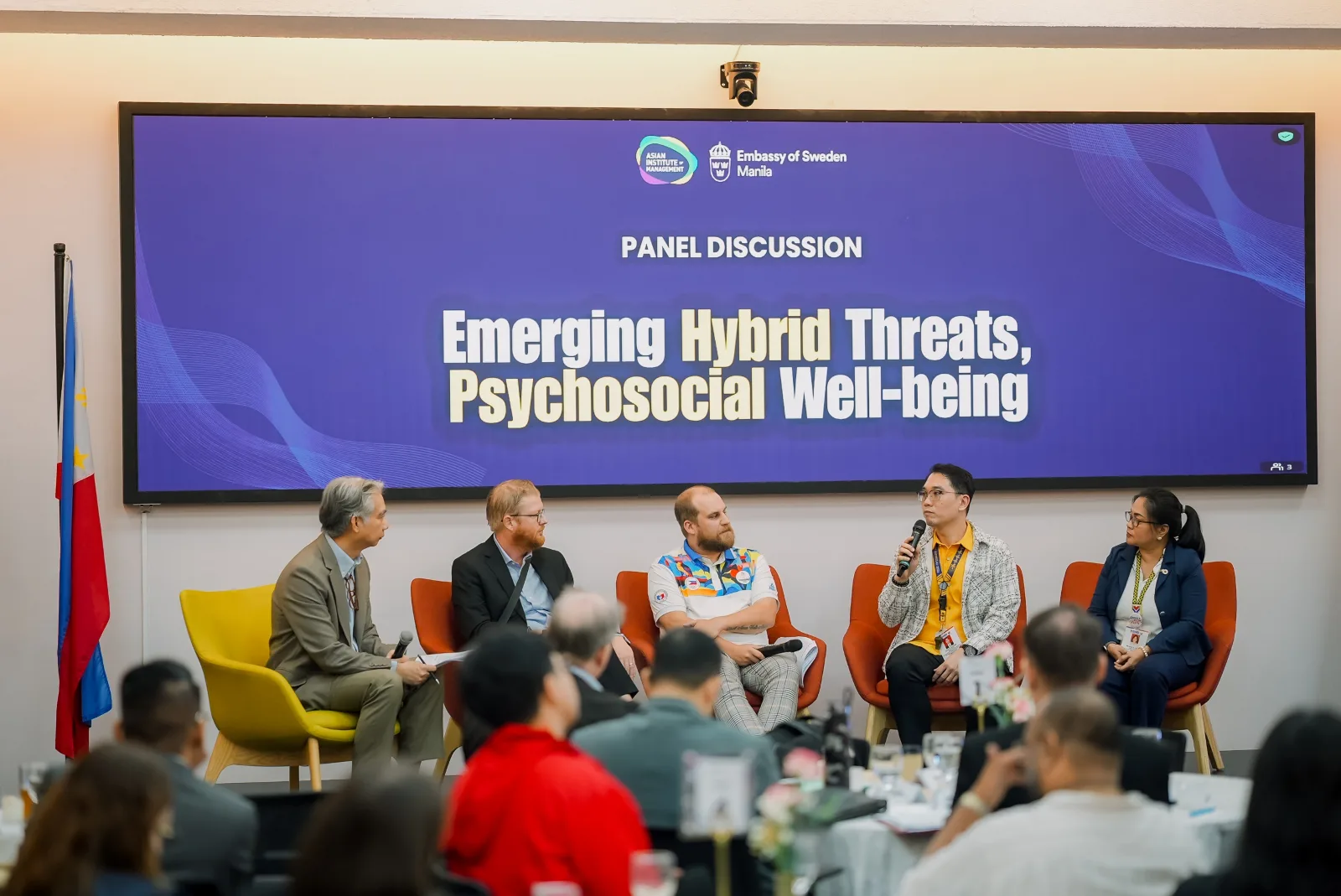
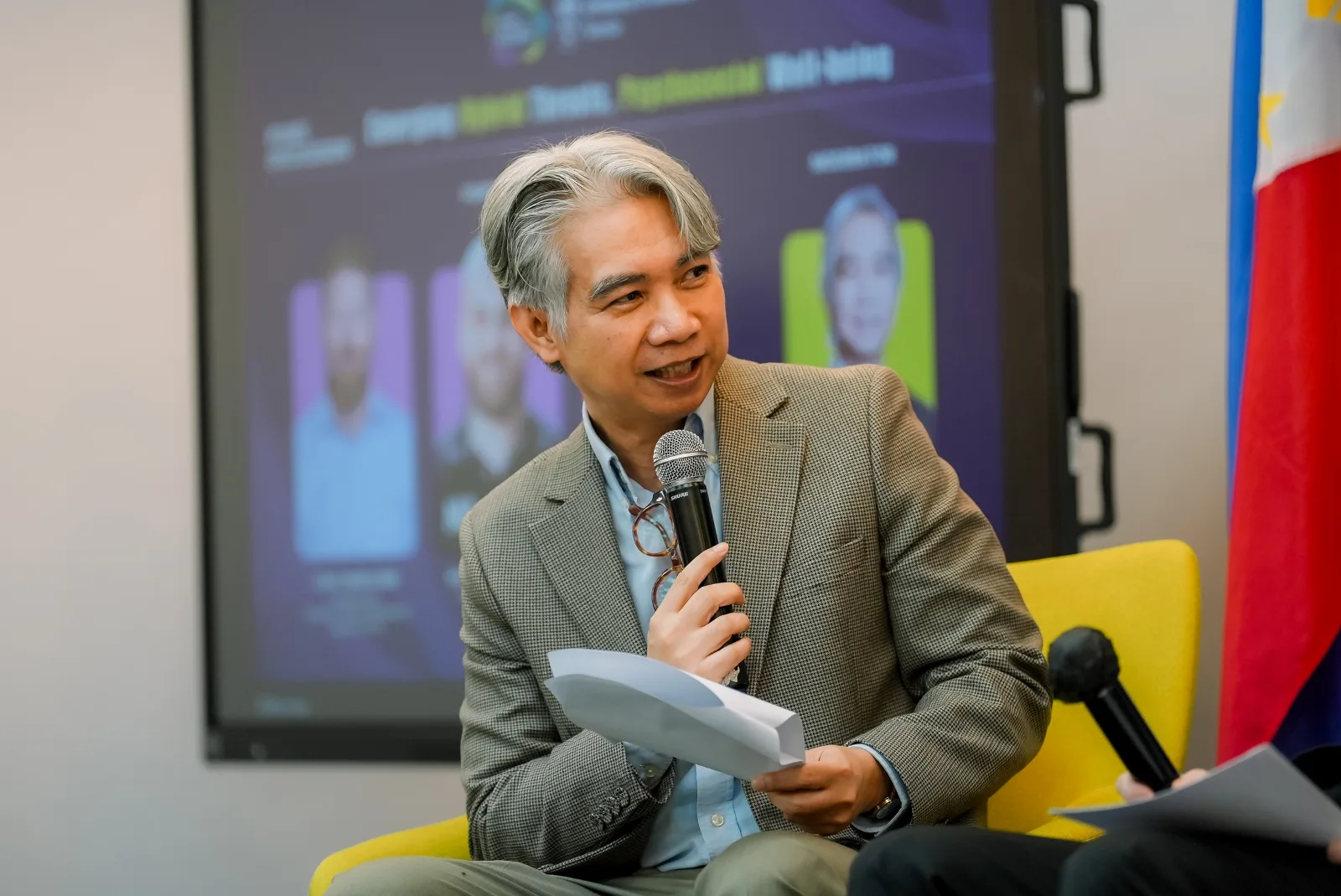
The afternoon sessions expanded the conversation to hybrid and cyber threats, cognitive warfare, social networks, supply chains, and psychosocial resilience. Panel 3, moderated by by Prof. Manny De Vera, PhD, Academic Program Director of the Master in Development Management at AIM, featured Carl Marklund, PhD of FOI, Martin Andersson, Coach of the Philippine National Floorball Teams, and Department of Social Welfare and Development (DSWD) Directors Miramel Garcia-Laxa, National Program Manager of the Peace and Development Buong Bansa Mapaypa (PDBBM) Program, and Elvis Quitalig, Deputy Program Manager.
Across the discussions, a clear direction emerged: resilience depends not only on responding effectively to crises, but on connecting information, institutions, and expertise early enough to prevent risks from becoming larger emergencies.
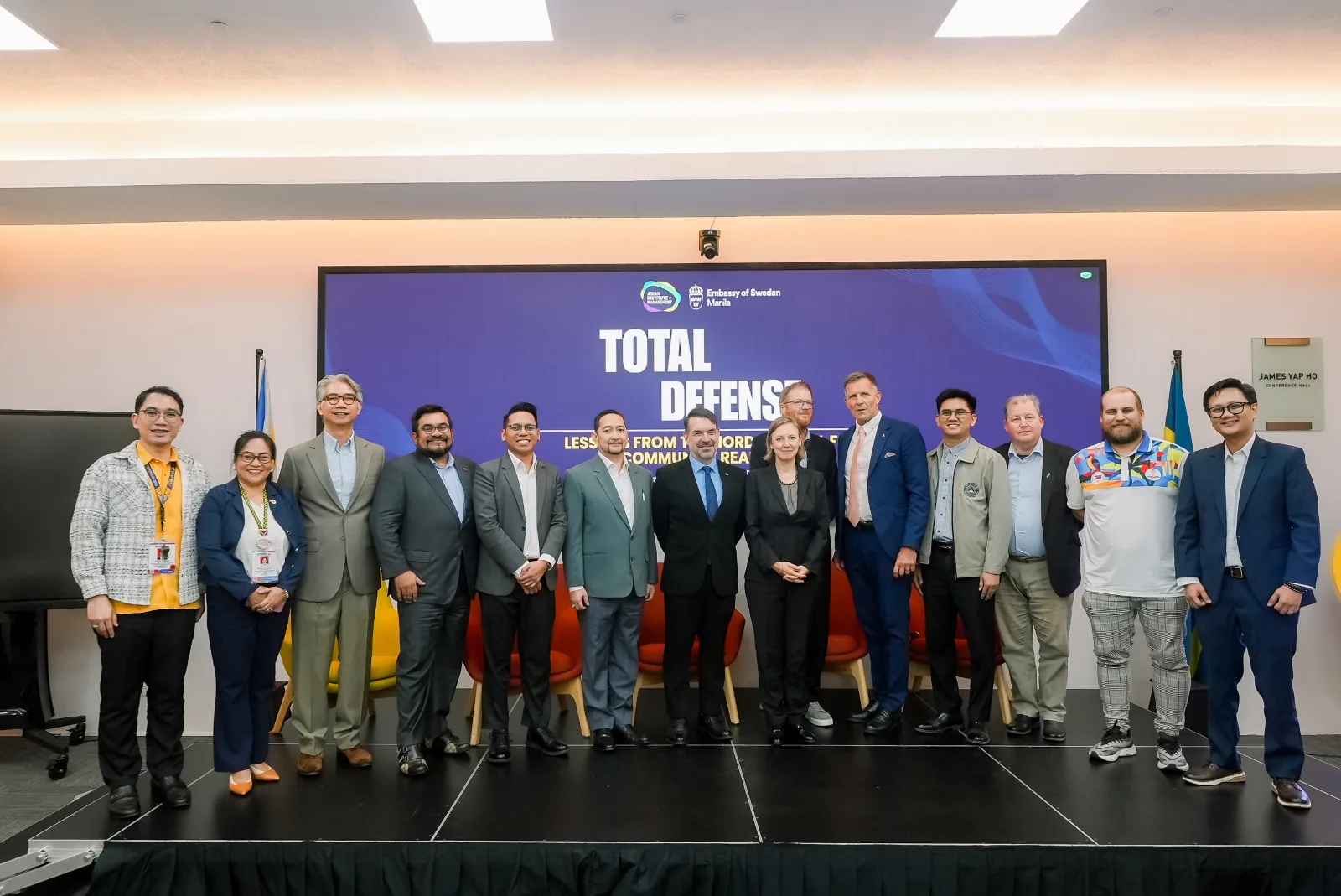
Dumbrique’s participation placed CrisisOps within this broader conversation on the future of disaster intelligence and proactive readiness. As climate, infrastructure, security, and humanitarian risks become increasingly interconnected, the ability to transform diverse information into timely, actionable intelligence is becoming a critical component of national resilience.
The forum concluded with a synthesis of key takeaways and strategic next steps from Prof. Chad Briggs, reinforcing the importance of continuous collaboration, forward-looking intelligence, and action before threats become crises.
#TotalDefense #DisasterIntelligence #ProactiveReadiness #ClimateResilience #CrisisManagement #DisasterRiskReduction #OperationalIntelligence #CrisisOps
Topics
Share this story
About CrisisOps
CrisisOps is a Physical AI platform for climate resilience, helping governments, communities, critical infrastructure operators and organizations understand changing physical conditions and act with confidence.
Media inquiries: media@crisisops.ai
Related stories
All stories
Events
CrisisOps advances Operational Intelligence vision for stronger Philippine civil defense
CrisisOps presented Operational Intelligence as a framework for turning critical disaster information into coordinated action and stronger resilience.
2 min read

Company News
CrisisOps takes climate technology to Harvard Innovation Labs
CrisisOps has been selected for the 2026–27 Harvard Climate Entrepreneurs Circle, expanding its engagement in global climate innovation. The program will support the venture’s work in disaster management, climate adaptation, and resilience.
3 min read
Events
CrisisOps and Asian Institute of Management advance AI-driven disaster resilience
CrisisOps and AIM convened 75 disaster and crisis management stakeholders to explore AI and Operational Intelligence. The workshop focused on strengthening situational awareness, coordination, and crisis decision-making.
3 min read