

During a critical incident, global data creation scales at an unprecedented rate, with humanity generating over 403 million terabytes of data every single day. For executive leaders and incident commanders, this digital deluge creates an acute crisis: rather than facing a lack of information, they confront an overwhelming signal-to-noise ratio where 80% of professionals experience severe information overload.
Without clear structure, incoming field reports—comprising frantic dispatch logs, informal text messages, unverified ground updates, and scattered geographic coordinates—trigger operational paralysis instead of clarity. This dynamic costs organizations and public safety agencies billions annually in delayed decisions, redundant efforts, and lost productivity.
Bridging the gap between raw frontline intelligence and executive decision-making requires converting disorganized observations into structured, standardized operational data. Research highlights that knowledge workers spend up to 3.6 hours each day sifting through unorganized data, searching for verified facts across fragmented communication channels.
Standardizing field reporting directly at the point of capture fundamentally alters this trajectory. When field personnel submit structured inputs categorized by precise hazard type, resource needs, exact spatial coordinates, and verified urgency, chaotic ground noise transforms instantly into clean, database-ready assets.
Instead of spending precious minutes deciphering vague descriptions or managing up to 275 daily interruptions, command staff receive standardized parameters that feed directly into real-time analytics engines.
This unified data stream establishes a coherent Common Operational Picture across the entire theater. Leadership can pinpoint critical resource deficits before severe bottlenecks emerge, track incident movement across spatial maps, and maintain strict audit trails for compliance and post-incident review.
According to research from the University of California, Irvine, led by Dr. Gloria Mark, it takes over 23 minutes to regain full focus after a single significant operational disruption. Operational clarity directly safeguards executive bandwidth, allowing incident commanders to eliminate ambiguity and shrink the window between threat recognition and resource deployment from hours down to minutes.
Ultimately, replacing noise with structured intelligence enables leaders to allocate budgets, deploy specialized units, and issue public safety advisories with absolute confidence—streamlining field logistics, protecting critical infrastructure, and saving lives when every second counts.
Topics
Share this story
About CrisisOps
CrisisOps is a Physical AI platform for climate resilience, helping governments, communities, critical infrastructure operators and organizations understand changing physical conditions and act with confidence.
Media inquiries: media@crisisops.ai
Related stories
All stories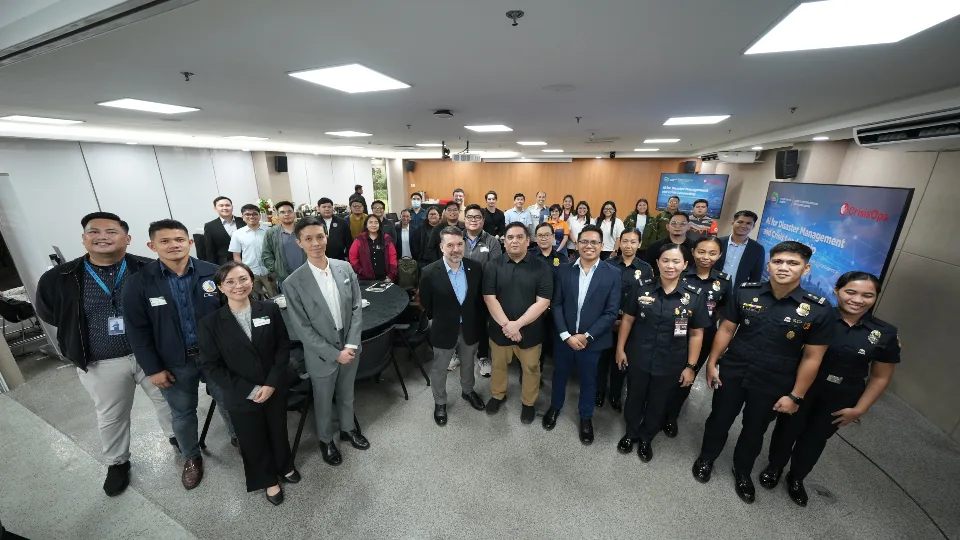
Events
CrisisOps and Asian Institute of Management advance AI-driven disaster resilience
CrisisOps and AIM convened 75 disaster and crisis management stakeholders to explore AI and Operational Intelligence. The workshop focused on strengthening situational awareness, coordination, and crisis decision-making.
3 min read
Research & Insights
What Makes a Disaster Response System Operational?
Exploring how connected information, shared situational awareness, and coordinated workflows help turn disaster data into actionable decisions.
2 min read

Operational Intelligence
El Niño Risks Rise When Disaster Information Falls Short
Discover how operational intelligence helps connect fragmented data, improve coordination, and strengthen El Niño preparedness.
1 min read